
How to Choose a Running Buggy That Works for Everyday and Running Life
A running buggy. Jogging stroller. Pushchair with attitude. Whatever you call it, if you’re here, you’re probably trying to figure out which one might actually work for you.
And yes, they’re mostly the same thing — but depending on your search term, the results you get can vary wildly. Trust me, I lost hours to that rabbit hole before landing on one that fit our life.
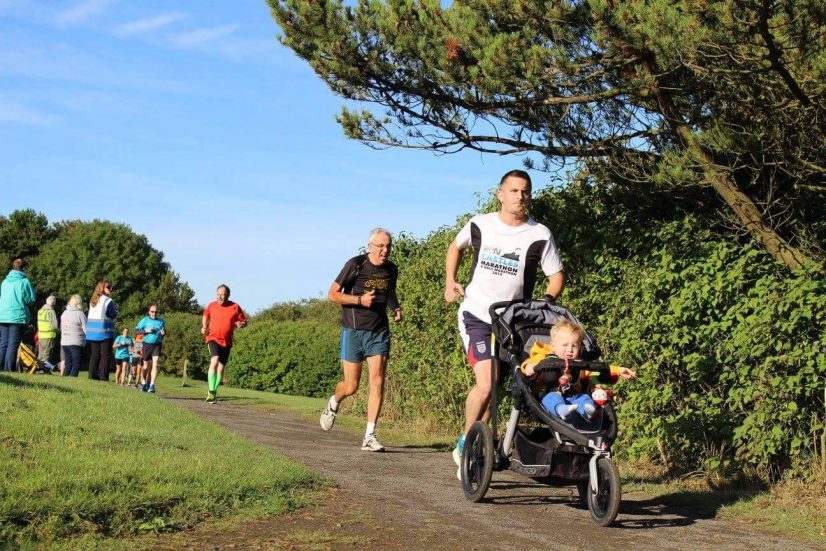
This post isn’t a technical deep-dive or a sales pitch. It’s what I learned the hard way, and how we ended up running parkruns with a Graco Relay and making it work for real life with kids, a school run, and gravel paths.
Budget First, Always
Before anything else, get a budget in mind. Running buggies aren’t cheap, but they’re more investment than impulse buy. They tend to hold their value well, and if you look after it, someone else will almost certainly be looking for one when you’re ready to pass it on.
What I Needed (Your Priorities May Differ)
My checklist looked like this:
- A dual-purpose front wheel – fixed for running, swivel for everyday use
- Pneumatic tyres and suspension for gravel trails and potholes
- Something that could handle the school run and weekend parkruns
- A seat big enough for my son who was quickly outgrowing our travel system
That ruled out quite a few fixed-wheel-only models like the BOBs and Out’n’About Nipper Sport – great for pure runners, but not as practical for everyday life.
Doing the Research
Once I narrowed the field, I did what you’re doing now: read reviews, watched YouTube videos, and compared specs.
Eventually, I went for the Graco Relay Jogger — marketed in the US as a jogging stroller. At the time, it was also available on Amazon UK under the name Graco Relay Pushchair – Panther.
Why I Chose the Graco Relay
A few things tipped the balance:
- Price — under my budget
- What came in the box — chair, rain cover, and a parent organiser for phone/keys/water
- Pneumatic tyres and suspension
- Dual-purpose front wheel with adjustable tracking
- Single-hand fold for collapsing the buggy easily
It didn’t include a handbrake or wrist tether like the US version, but a tether is easy to add, and I wasn’t descending Ben Nevis anytime soon. I would be able to comfortably control a descent with a little resistance.
It also fit in the back of my Mk7 VW Golf once the quick release wheels were off — which was a big bonus.
Is It Perfect? No. Did It Work? Yes.
If budget hadn’t been a factor, I probably would’ve gone for the Baby Jogger Summit X3. It ticked every box and came with that handbrake I mentioned.
But once I factored in all the extras the Baby Jogger needed (rain cover, organiser, etc.), the Graco just made more sense for our budget and needs.
I’ll be reviewing it in more depth separately [HERE], but let me say this: it didn’t slow me down.
I could comfortably run a 26-27 minute parkrun with my son in the seat. That’s all I needed to know.
If you’re trying to balance running with real life — and you want one buggy that can handle both — the Graco Relay might just work for you like it did for us.
And if your little one eventually outgrows even the biggest of commercial buggies? Don’t worry — there are specialist options out there, too. We’re living proof.
Update: We’ve since moved on from the Graco to a specialist buggy – if you’re running with older children or have additional needs to consider, check out my latest buggy review – The Specialist Running Buggy That Got Us Back on the Road